Browse Items (87 total)
Sort by:
John Warfield, Age 5
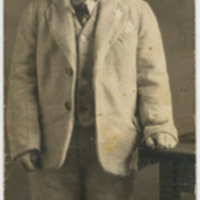
This 1931 formal portrait shows Warfield at age 5.
Camp Crowder, MO
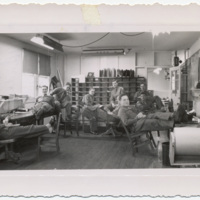
Soldiers pose in an office at Camp Crowder, MO. Warfield is second from left, reclining on a table.
Systems Engineering Workshop, 1971
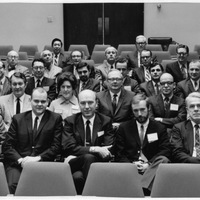
Warfield and colleagues pose for a group photo at a Systems Engineering Workshop in February 1971. Warfield is in the center of the front row.
Computer Laboratory, Penn State, 1954
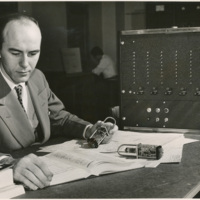
Warfield examines compares computer equipment with a text book at the Penn State Computer Laboratory, Spring 1954.
Army Specialized Training Program (ASTP) Group Photo, 1945
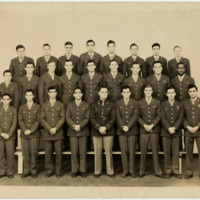
Soldiers of the Army Specialized Training Program pose for a photo at Penn State College in 1945. Warfield is in the second row, fourth from the left.
Private John Warfield
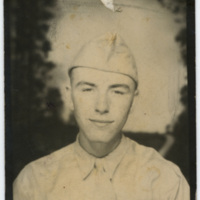
This photo of Private John Warfield was taken in 1944, while stationed in Arkansas.
High School Play: "Faith, Hope, and Flarity"
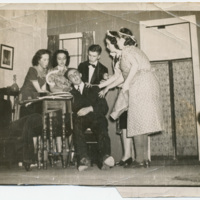
Warfield acts a part in his high school's junior play. He can be seen standing, center rear.
1931 Newspaper Story About Young Warfield

In 1931, a story was published in the St. Louis Post Dispatch regarding Warfield's high intelligence and abilities.
Return to Penn State
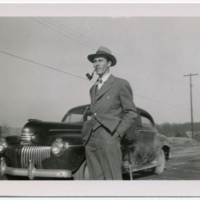
In 1949, Warfield returned to Penn State College, this time as a member of the faculty, teaching Electrical Engineering. Here, he poses by the side of the road with an automobile.
John Warfield and Rosamond Howe, 1947
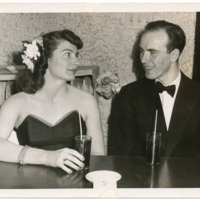
John Warfield with his future wife, Rosamond Howe, in 1947.
The Warfield Family, 1970
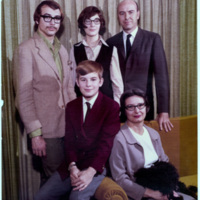
John Warfield poses with his family in January 1970 at their Columbus, OH home.
Standing (L to R): Daniel, Nancy, John
Sitting (L to R): Thomas, Rosamond
Standing (L to R): Daniel, Nancy, John
Sitting (L to R): Thomas, Rosamond
Cover: Pennsylvania State University Engineering Review
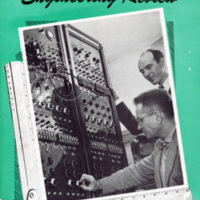
Warfield (rear) and colleague H.I. Tarpley appeared on the cover of the Summer 1954 edition of Pennsylvania State University Engineering Review. In the photo, they are working with pioneering early computing equipment.
PENNSTAC: Fast Memory Switch Wiring Diagram
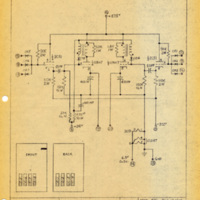
This one page excerpt is from a large binder of computing materials related to the PENNSTAC computer project at Penn State in the 1950's. Note that the diagram has been approved and initialed by Warfield.
Systems Engineering, 1955
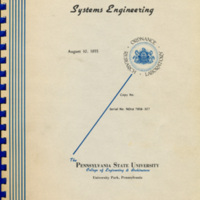
Warfield did research work at Penn State for the military. In this 1955 report published by the Navy Department's Ordnance Research Laboratory, Warfield provides suggestions for effective methods to manage systems.
ISM Session, circa 1974
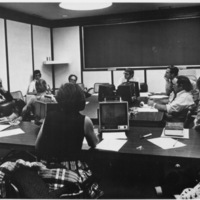
This Battelle photograph shows Warfield (seated, far left) conducting an Interpretive Structural Modeling session sometime on or before 1974. Note the computer terminals on the tables.
Warfield with PENNSTAC Computer, 1973
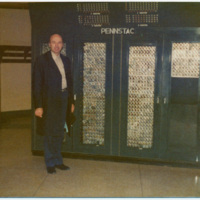
Warfield was one of the chief designers of the PENNSTAC computer in the 1950's. Here, on a visit to the Penn State Campus in 1973, he poses with the computer - no longer in service, and housed as museum piece on campus.
1979 Fortran Code for ISM
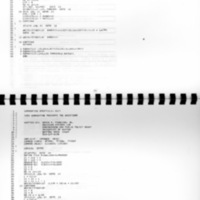
This excerpt from a larger volume shows Fortran code developed for the Interpretive Structural Modeling process. These pages of code show subroutines for displaying relationships and questions on session monitors.
Diagram of the Interactive Between Man and Machine in the Interpretive Structural Modeling Process
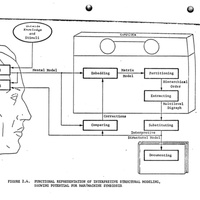
This 1973 sketch shows the interaction between humans and digital computers, to be used in the Interpretive Structural Modeling process devised by Warfield.
Sigma-5 Diagram for Interactive Management
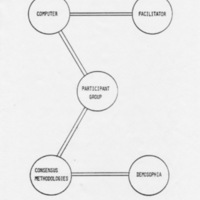
The Interactive Management process is comprised of 5 distinct components, seen in this diagram. The drawing is taken from 1985's "A Course in Generic Design."
Recruiting Letter from Ordnance Research Laboratory
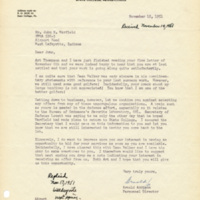
This 1951 letter from Ordnance Research Laboratory Personnel Director Arnold Addison is one of a number of such exchanges he had with Warfield during this period. Note that he references Secretary of Defense Robert Lovett as someone keenly interested…
Offer Letter from Hughes Aircraft
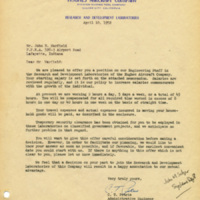
This 1952 letter from Hughes Aircraft offered Warfield a position in their Research and Development Laboratories, working on "classified government projects."
Warfield Considered for Chief Scientific Advisor, Army Corps of Engineers
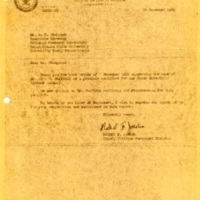
In 1960, Warfield's was recommended for consideration as the Chief Scientific Advisor of the Army Corps of Engineers.
Letter from John C. Johnson, Ordnance Research Laboratory
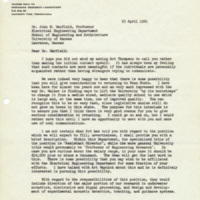
This 1961 letter from John C. Johnson, Director of the Ordnance Research Laboratory at Penn State, discusses the possibility of a return to the university. In goes into great detail on the goals and functions of the Ordnance Research Laboratory.
Offer Letter from Pennsylvania State College
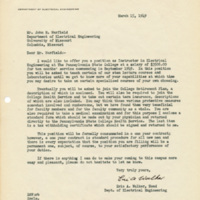
Warfield returned to Penn State in 1949 as an Instructor in Electrical Engineering. This offer letter lays out the specifics of salary, duties, and the possibility of tenure.
Certificate: Army Specialized Training Program
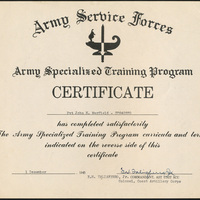
Private Warfield received a certificate upon completion of a series of courses in Electrical Engineering at Penn State taken from December 1944 through December 1945.